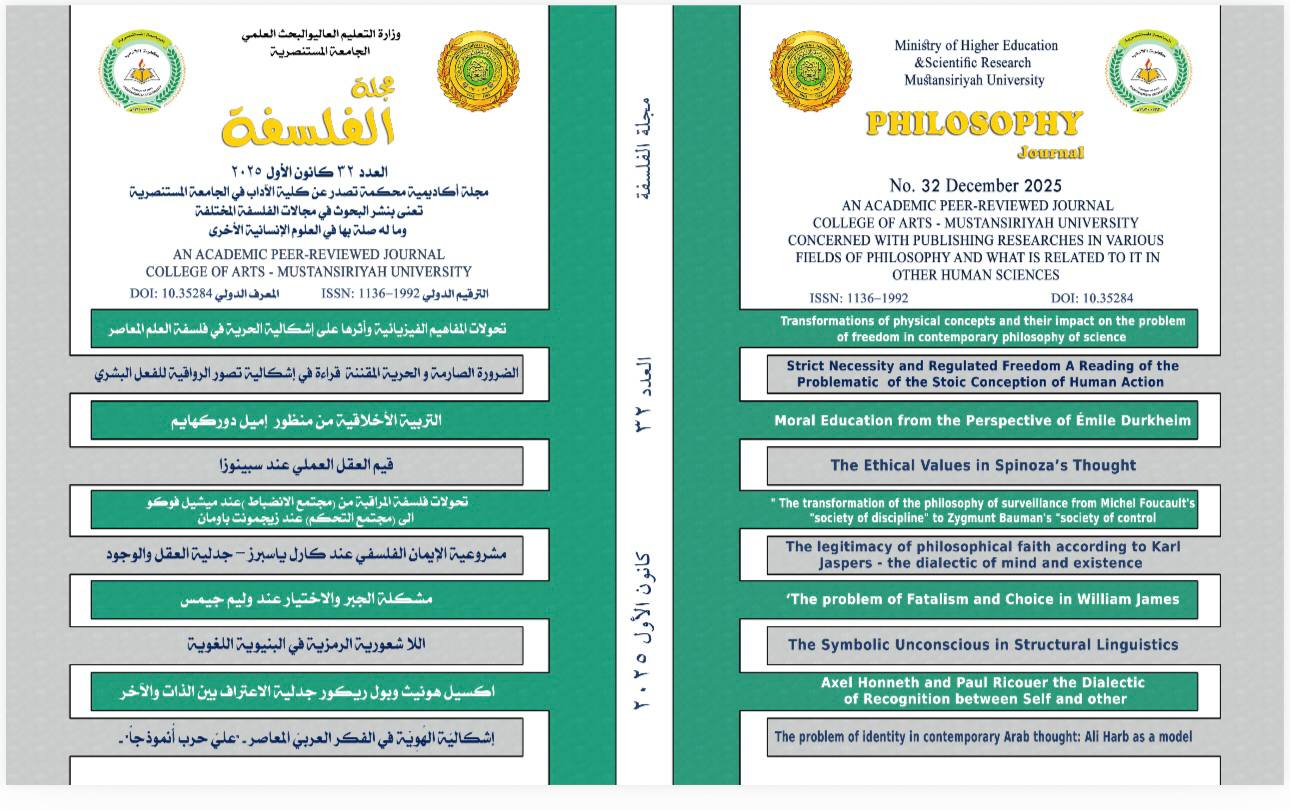
The Ethical Values in Spinoza’s Thought
Keywords:
الحرية، الضرورة، الخير، الشر، الفضيلة.Abstract
The current study examines the ethical issues of Baruch Spinoza through an analytical investigation of his core concepts and their relevance to contemporary thought. It begins by situating ethics within the broader domains of philosophy—epistemology, ontology, and axiology—highlighting Spinoza’s endeavor to establish a novel ethical framework grounded in the concepts of freedom and necessity, virtue, and the notions of good and evil, ultimately culminating in the intellectual love of God. The analysis of the present study demonstrates that Spinoza’s ethical philosophy is based on a rational-naturalistic perspective, portraying human beings as simultaneously determined by nature yet capable of attaining freedom through the rational comprehension of natural laws. The researcher agrees with Spinoza in certain respects, particularly regarding the existence of spheres of human choice, while challenging his doctrine of absolute determinism, asserting that certain human actions are indeed subject to free will
Downloads
Published
Issue
Section
License
Copyright (c) 2026 م. م عقيل عبد الله عزيز

This work is licensed under a Creative Commons Attribution 4.0 International License.