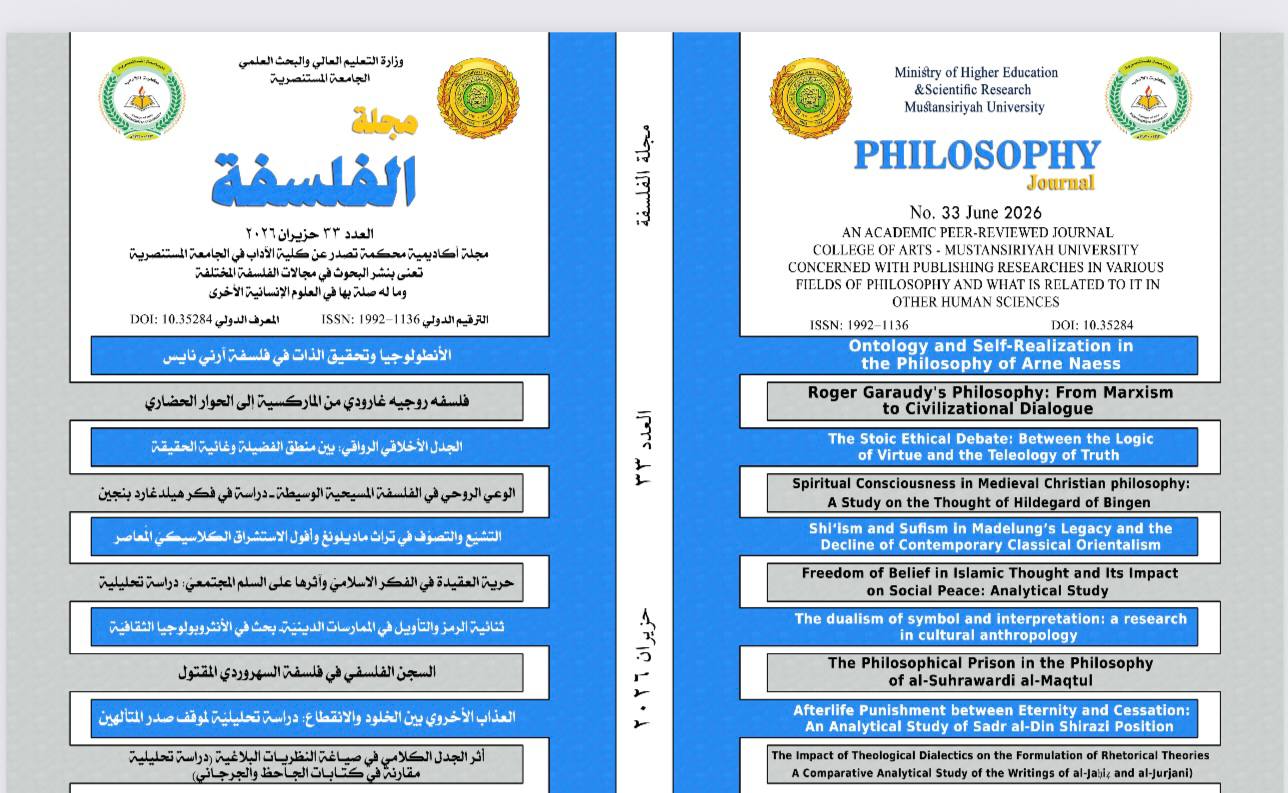
The Stoic Ethical Debate: Between the Logic of Virtue and the Teleology of Truth
Abstract
The significance of this study lies in highlighting the role of logic among the philosophers of late Stoicism through its vital function in supporting ethics. For the Stoics، logic was not an end in itself but a tool for achieving right conduct and a virtuous life. Logical premises and syllogisms، built upon the methods of questioning and dialectical discussion، help a person understand the path they ought to follow and enable them to distinguish between good and evil، right and wrong، both in words and actions. Furthermore، logic serves as a means to organize thought and purify emotions، allowing reason to become the supreme governor over desires and impulses. By practicing Stoic dialectical logic and careful analysis، an individual gains the ability to confront complex life situations with wisdom and composure، thus enabling them to make balanced decisions that elevate both their ethical and spiritual life.
Downloads
Published
Issue
Section
License
Copyright (c) 2026 م.د. مؤيد جبار رسن

This work is licensed under a Creative Commons Attribution 4.0 International License.