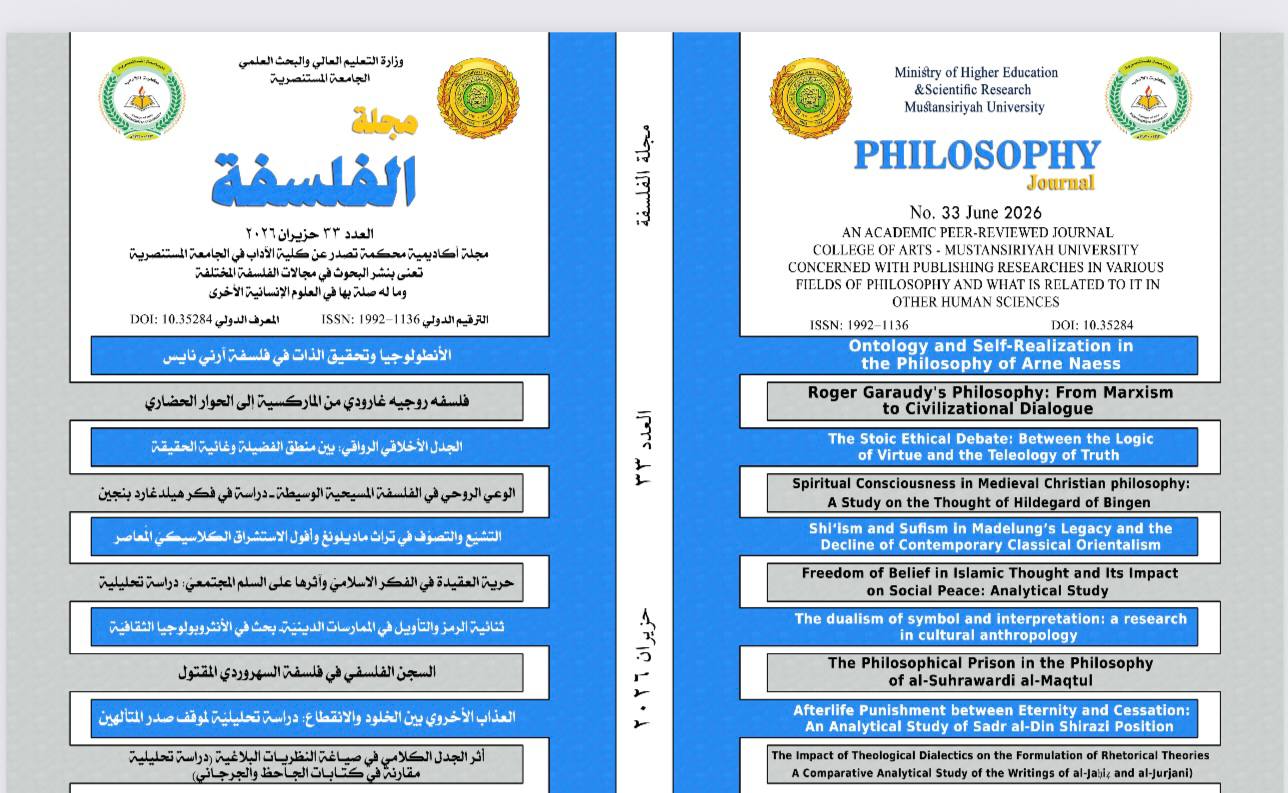
The Concept of Imamate According to Abu Bakr al-Asamm: An Analytical and Critical Study
Abstract
The question of the Imamate has long been one of the most debated issues in the history of Islamic thought due to its close connection with theological and political considerations. This study examines the position of the Muʿtazilite theologian Abū Bakr al-Aṣamm, whose view represents a distinctive departure from the dominant perspectives of Islamic sects regarding the necessity of the Imamate and the appointment of an Imam. Al-Aṣamm proposes a rational and critical approach that links the legitimacy of political authority to the moral and social condition of the community, emphasizing justice and social cohesion as the fundamental basis for establishing authority.
The research seeks to analyze the nature of al-Aṣamm’s divergence from the commonly accepted theological position on the obligation of the Imamate. It also clarifies the concept of the Imamate within Islamic intellectual discourse and compares al-Aṣamm’s perspective with those of major Islamic traditions, including Sunnī, Imāmī, Khārijite, and Muʿtazilite views. In doing so, the study highlights the philosophical and social dimensions underlying his position and situates it within the broader context of early Islamic theological debates.
Methodologically, the study adopts an analytical and critical approach through examining textual reports attributed to al-Aṣamm in classical works on Islamic sects and doctrines, particularly Maqālāt al-Islāmiyyīn by al-Ashʿarī and al-Milal wa al-Niḥal by al-Shahrastānī. It further analyzes his arguments and compares them with the prevailing theological frameworks of his time, while also offering a contemporary interpretive perspective that relates his ideas to certain concepts in modern political thought, especially those concerning limited authority and forms of social self-regulation.
The study concludes that al-Aṣamm does not consider the Imamate an absolute obligation, either rationally or religiously. Rather, he views it as conditional upon the realization of justice and social order within the community. According to his view, if individuals are capable of establishing justice independently, the necessity of an Imam diminishes. His position also reflects an ethical orientation that emphasizes collective responsibility and social awareness as alternatives to coercive centralized authority, understanding the Imamate as a means for achieving justice rather than an end in itself. Overall, the study shows that al-Aṣamm’s perspective represents an important example of intellectual diversity within early Islamic thought and reveals the presence of critical and flexible approaches to political authority in classical Islamic theology.