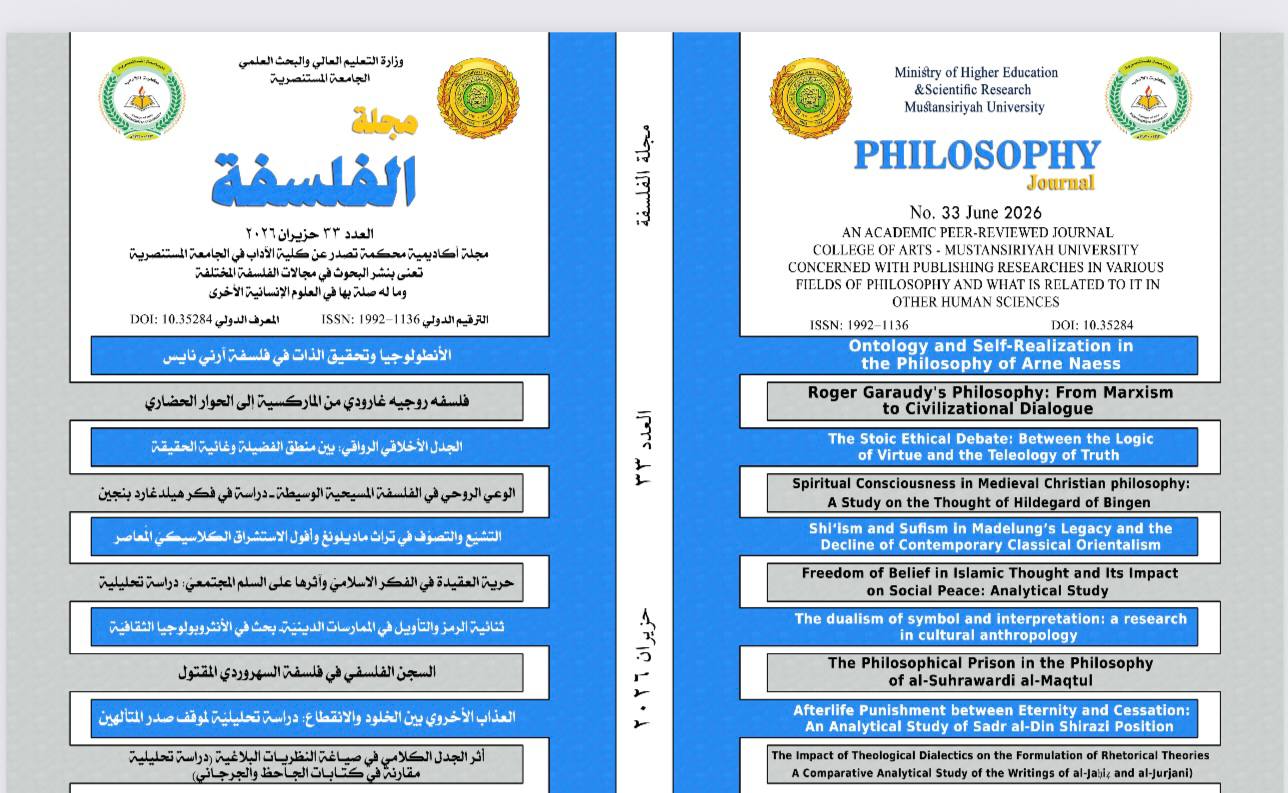
الأنطولوجيا وتحقيق الذات في فلسفة آرني نايس
الملخص
يتناول هذا البحث رؤية آرني نايس الفلسفية للأنطولوجيا وتحقيق الذات ، وهو ينطلق من فرضية أساسية فحواها ، إن تلك الرؤية الفلسفية ، التي أطلق عليها نايس تسمية ( الإيكوسوفيا ) تمثل البنية الانطولوجية العميقة لمذهب آرني نايس الايكولوجي . حيث حاولنا أن نوضح أن الإيكوسوفيا ليست مجرد برنامج بيئي عملي ، بل هي رؤية فلسفية كونية تهدف إلى إعادة صياغة جوهر الوجود الإنساني في علاقته بالطبيعة، متجاوزةً بذلك المعالجات السطحية للمذاهب البيئية السائدة إلى محاولة إحداث تغيير واعٍ في الموقف الوجودي للفرد تجاه العالم، وبالتالي ، صياغة رؤية انطولوجية جديدة. وقد أظهر البحث استناد رؤيته هذه إلى ركيزتين فلسفيتين جوهريتين تجاوزتا حدة الثنائية التقليدية بين الذات والموضوع ، هما :
أولاً- وحدة الوجود (وحدة الحياة):
حيث بيّنا تبني نايس رؤية واحدية للكون (مستلهمة من سبينوزا)، لا وجود فيها لـ "أنا" منعزلة عن شبكة الوجود ، بل إن الطبيعة، في هذا المنظور، ليست مجموعة من الموارد ، الجامدة أو الأشياء المادية المتميزة عن الإنسان، بل هي "جشتالط " ، أي ، بنية متكاملة من العلاقات. ونتيجة لذلك ، فإن أي انفصال للإنسان عن الطبيعة هو في جوهره انفصال للذات عن مكونات هويتها الأصيلة، مما يجعل الاغتراب عن الطبيعة اغتراباً وجودياً بالمعنى الدقيق.
ثانياً - تحقيق الذات :
وقد مثل هذا المفهوم نقطة التحول في فلسفة آرني نايس ، حيث أعاد فيه تعريف الذات من منظور " الذات الكونية الشاملة " ، بناء على المفهوم الهندوسي للذات ، الاتمان . حيث أن تحقيق الذات ، لا يعني تغليب ( الأنا الفردية ) على حساب الذوات الأخرى ، بل هي عملية انفتاح " انطولوجي " ، تجعل من ذوات الأخرين ، والاجناس ، والنظم البيئية ، جزءاً من تكامل أنا الفرد ذاته . ومن هذا المنطلق ، يصبح الإيثار فعلاً طبيعياً نابعاً من إدراك الفرد أن المساس بأي عنصر من عناصر الحياة هو مساس ب ( ذاته الكبرى ) . ويخلص البحث إلى أن انطولوجيا نايس ورؤيته الفلسفية في تحقيق الذات ، التي تمثلت في ( الايكوسوفيا ) ، هي حكمة ايكولوجية تتجاوز المعرفة النظرية إلى البصيرة العملية . إنها فلسفة تسعى لتحقيق التوازن من خلال نظرة تعظيم التنوع وتعقيد الحياة ، وترسخ مبدأ ( التعايش الكوني ). وبذلك ، يضع نايس الفلسفة في سياق أخلاقي جديد يربط بين نضج هوية الفرد وبين التزامه تجاه المحيط الحيوي ، جاعلاً من إدراك الترابط العضوي بين الكائنات شرطاً أساسياً للوجود الإنساني الأصيل .
التنزيلات
منشور
إصدار
القسم
الرخصة
الحقوق الفكرية (c) 2026 أ.م.د. خضر دهو قاسم

هذا العمل مرخص بموجب Creative Commons Attribution 4.0 International License.