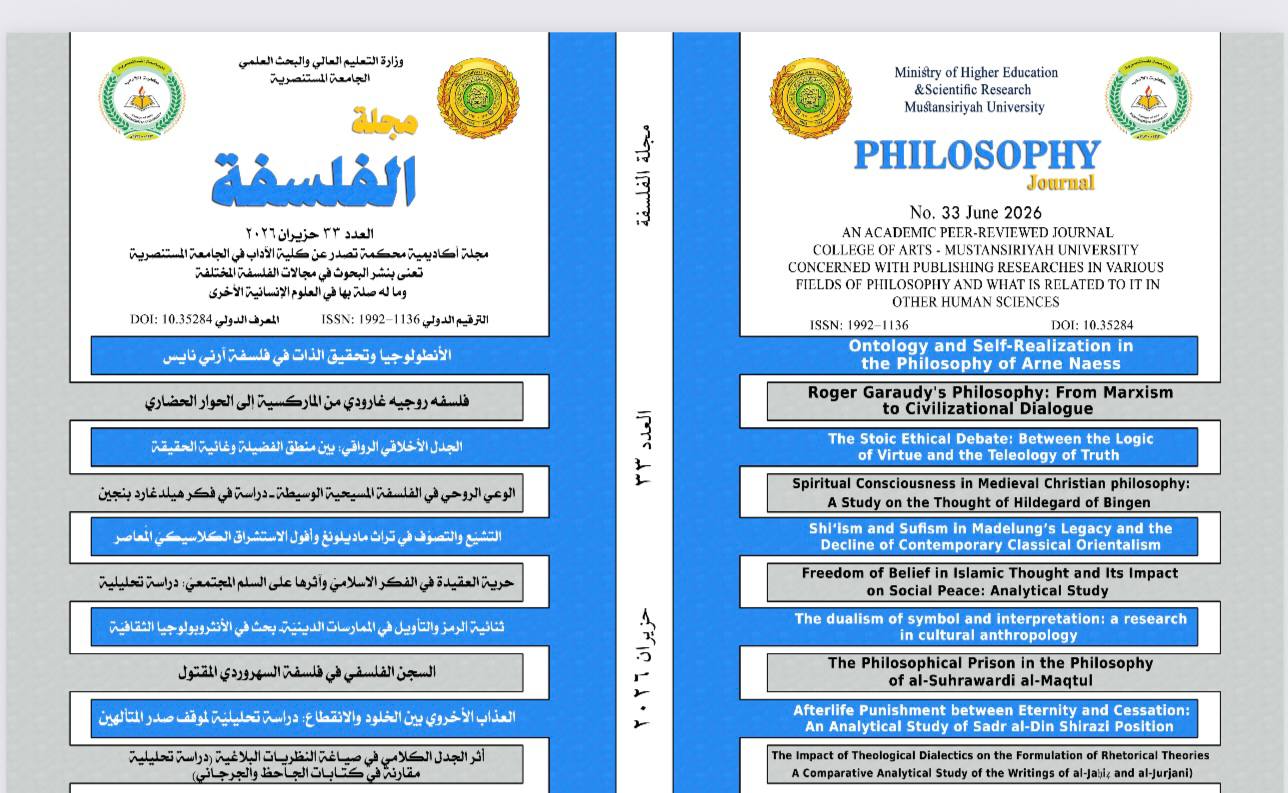
An Introduction to Bertrand Russell's Political Philosophy
Abstract
This research aims to uncover the political philosophy of Bertrand Russell (1872-1970), the British philosopher who not only contemplated existence but also engaged deeply with political and social life through bold and critical thought. The research seeks to identify the most important pillars upon which his political vision was based, from the concepts of the state, freedom, and authority, to economic reform, his critique of war, extreme nationalism, and capitalism, culminating in his call for lasting peace. It also examines his stance on democracy and education as cornerstones for building an ideal human society. The research employs a descriptive-analytical approach to review Russell's political ideas, analyze their philosophical foundations, reveal their internal coherence, and draw conclusions by tracing his views in his various works and formulating them into a comprehensive vision. The research concludes that Russell's political philosophy represents an exceptional model of liberal humanistic thought, combining logical rigor with a moral commitment to humanity, and that many of his ideas retain their validity and relevance in contemporary political debates to this day